Route, Path and Painting Puzzle Tips
Some puzzles are not about what to place, but about which way to go and in what order. You are drawing a path, choosing a route or deciding which piece to move first. These puzzles feel different from block puzzles, because the answer is often a sequence. The following ideas will help you find it.
Look at the whole board first
Before making your first move, spend a moment on the complete picture. Where does everything start? Where does it need to end up? Players who react to the first obvious move often find that they have closed off a route they needed later.
Start with the most restricted parts
In Connect Cats, you draw paths between cats of matching colors without crossing lines. Pairs that sit close to the edge of the board have very few possible routes, so decide those first. Once the restricted paths are set, the more flexible pairs have to fit around them, and the puzzle gets easier instead of harder.
Think about the order of moves
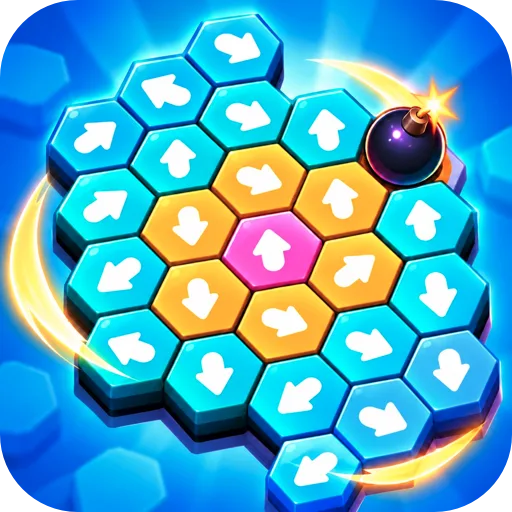
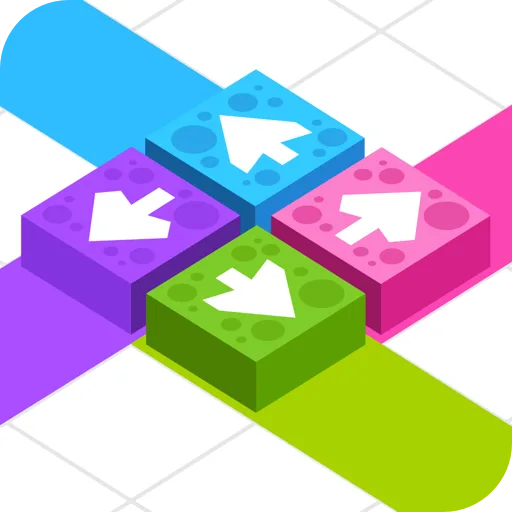
In Car Paint, each car drives in a line and paints the tiles it passes. In Tap Away Paint, you tap arrow blocks to send them moving and cover a building with color. In both games, what you do first affects what is possible next. Try to picture the result of each move before you make it, and look for a sequence that covers everything without leaving gaps.
Compare with the target
When a level shows a target pattern, as in Car Paint, keep looking back at it. After every move, compare what you have with what you need. It is easy to lose track of which tiles are still missing. A few seconds of checking is cheaper than restarting.
Avoid dead ends
A dead end is a position where none of your remaining moves helps. In Tap Away Paint, you can run out of options if you tap blocks in the wrong order, and there is also a timer. Prefer moves that leave you with more choices. If a tap or a path would close off a whole area, think twice.
Plan a snake's route in a maze
In Arcade Snake, the snake grows longer each time it eats, and the maze corridors are narrow. That means you are not only avoiding walls, you are also avoiding your own tail. Look a few turns ahead, and keep an escape route open. A long snake needs more room to turn than a short one.
Trap by thinking one step ahead
Brainrot Escape asks you to place the strict mother so that the Ballerina has no escape route. Instead of thinking only about where the Ballerina is now, think about which routes are still open and place the mother to close them. Good chasing is about limiting choices, not only about being close.
Do not be afraid to reset
If you realize that a level cannot be finished from your current position, restarting is often faster than trying to rescue it. Each attempt teaches you something about the level, and the second try usually goes much more smoothly than the first.
Stay patient
Route puzzles reward slow thinking. Rushing tends to create mistakes that you only see several moves later. Take your time on the early decisions, because those are the ones that determine the rest of the level.