Sliding Block Puzzle Tips
Примечание: пока руководства доступны только на английском языке.
Sliding puzzles ask you to move pieces around a crowded board so that one special piece can escape, or so that everything fits into place. They are a good workout for planning, and they reward players who think a few moves ahead. Here are the habits that make them much easier.
Find the goal first
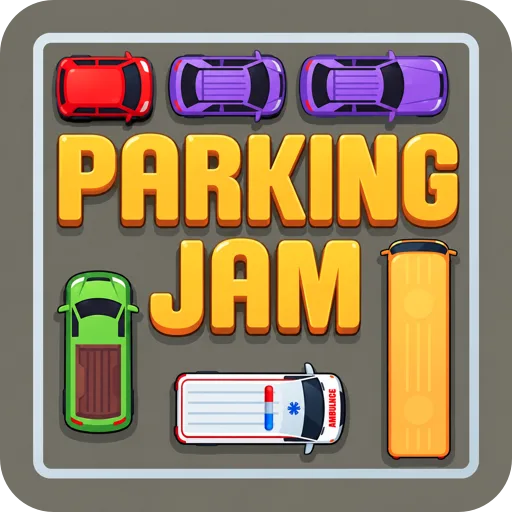
Before touching anything, identify what you need to achieve. In Parking Jam the goal is to get the ambulance out. In Cat Out it is to free the trapped cat. Knowing exactly which piece must reach which spot gives every other move a purpose.
Work backward from the exit
Instead of asking "what can I move?", ask "what is standing in the way?". Look at the path the goal piece needs, and list the blockers. Then look at what blocks those blockers. Following the chain backward usually shows you which piece has to move first, and it often shows that most of the board does not matter at all.
Study each piece's freedom
Some pieces can move in only one direction, or only a little, so they have far fewer options than others. Pieces with few options are the ones you should plan around. If a block can only slide sideways, ask what that means for the space next to it.
Count your moves when they are limited
Many puzzles give you a limited number of steps. In Parking Jam, both your steps and your energy are limited, and Amazing Number restricts how many times each block can move. In these games, wandering moves are expensive. A short, well-planned sequence beats a long series of experiments, so think through a plan first and then execute it.
Handle keys and locked exits
In some levels, the exit is protected. Parking Jam has a laser door that opens only after the ambulance reaches a key, and Cat Out uses a key for exits that are guarded by a special block. When you see a locked exit, treat the key as a second goal. Plan a route to the key first, then from the key to the exit, and check whether both paths need the same pieces to move.
Avoid undoing your own progress
A common trap is moving a piece into a spot that is useful now and then having to move it back later. Before you slide something, look at where it will block you. A move that creates an empty space is good, but a move that fills the only empty space near the exit is dangerous.
Fitting puzzles need a plan for the shape
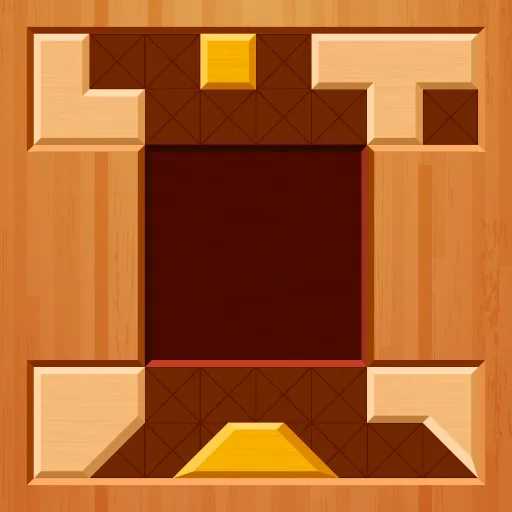
In games like Wood Block, where pieces of different shapes must fit into one compact structure, look at the largest and most awkward pieces first. Place them where they naturally belong, and use the smaller pieces to fill in gaps. If something does not fit, do not force it. Rotate your thinking and try a different arrangement.
Take a step back when stuck
If you have tried several moves and nothing works, restart the level and think about the layout from scratch. A fresh look often reveals a solution that was not visible after many small changes. Each restart teaches you which pieces really matter.