Tile-Matching Game Tips
Nota: las guías solo están disponibles en inglés por ahora.
Tile-matching games are easy to start and surprisingly tricky to finish. The rules are simple, but the difference between a smooth win and a stuck board comes down to planning. Whether you are matching sets of three, connecting identical pairs or sorting animals into slots, the same habits apply.
Look at the whole board first
Before your first move, take a few seconds to look at everything. Notice which pictures appear most often, which are rare, and which tiles are covered by others. Players who rush in and grab the first match they see often trap themselves later, because they removed tiles that were needed to uncover the rest.
Count before you commit
In games where you match sets of three, a picture only helps you if you can actually collect three of them. If a tile shows up only twice on the visible board, the third one is hidden underneath something. Keep track of the sets you can finish and save the uncertain ones for later. Counting is the single most useful habit in this genre.
Free the blocked tiles
When tiles are stacked, work on the layers that unlock the most pieces. A match that reveals two new tiles is worth more than a match that reveals none, even if both are easy. Aim to uncover new options as you go instead of only clearing the surface.
Do not collect singles too early
If a game lets you pick tiles and hold them somewhere before they match, avoid filling that space with pieces that do not belong together yet. Every unmatched tile takes room and reduces your options. Choose tiles that complete a set soon, and keep your holding area as empty as possible.
Pair games are memory games
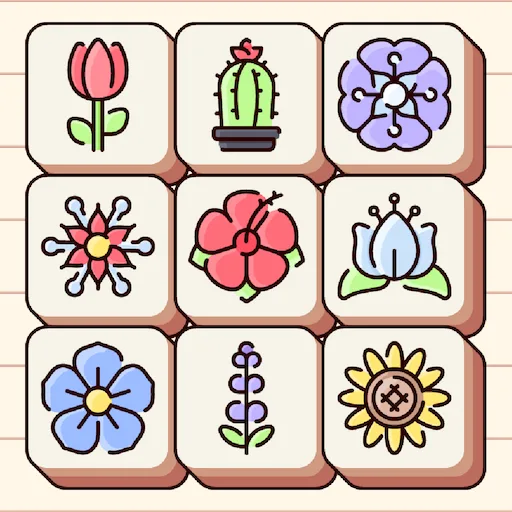
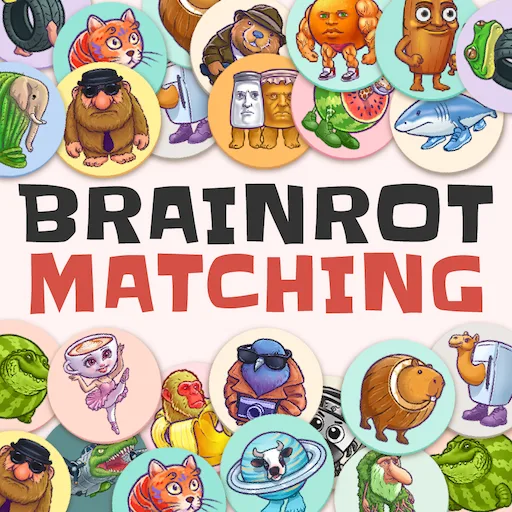
In games such as Brainrot Matching and Blossom, where you find identical pairs, split the board into regions in your mind and remember what is in each one. When you see a picture for the first time, note its position, and your next sighting of its twin will be much faster. Looking at the board in the same order each time also helps you avoid missing a corner.
Sorting games need consistency
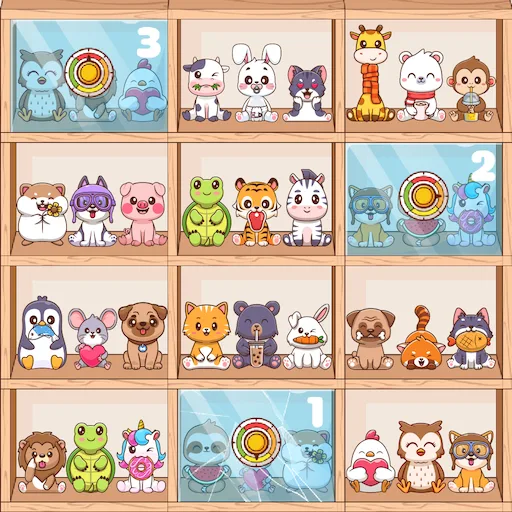
In slot-based games such as Animal Pals Pair, dedicate each slot to one type of animal whenever you can. Mixing types in one slot creates work later, because you then have to move the extras out. When space is tight, think about what you will need to move before you make the first move.
Use time pressure wisely
Timers reward steady play. Make the obvious matches quickly, then slow down for the decisions that shape the rest of the board. Ten seconds of planning on a hard level can save thirty seconds of recovering from a bad move.
Common mistakes to avoid
- Clearing only the easy tiles on top and leaving the difficult ones for last.
- Ignoring the tiles that appear only a few times.
- Playing at full speed on every level instead of slowing down when the board gets crowded.
- Forgetting where a picture was seen in memory-based pair games.